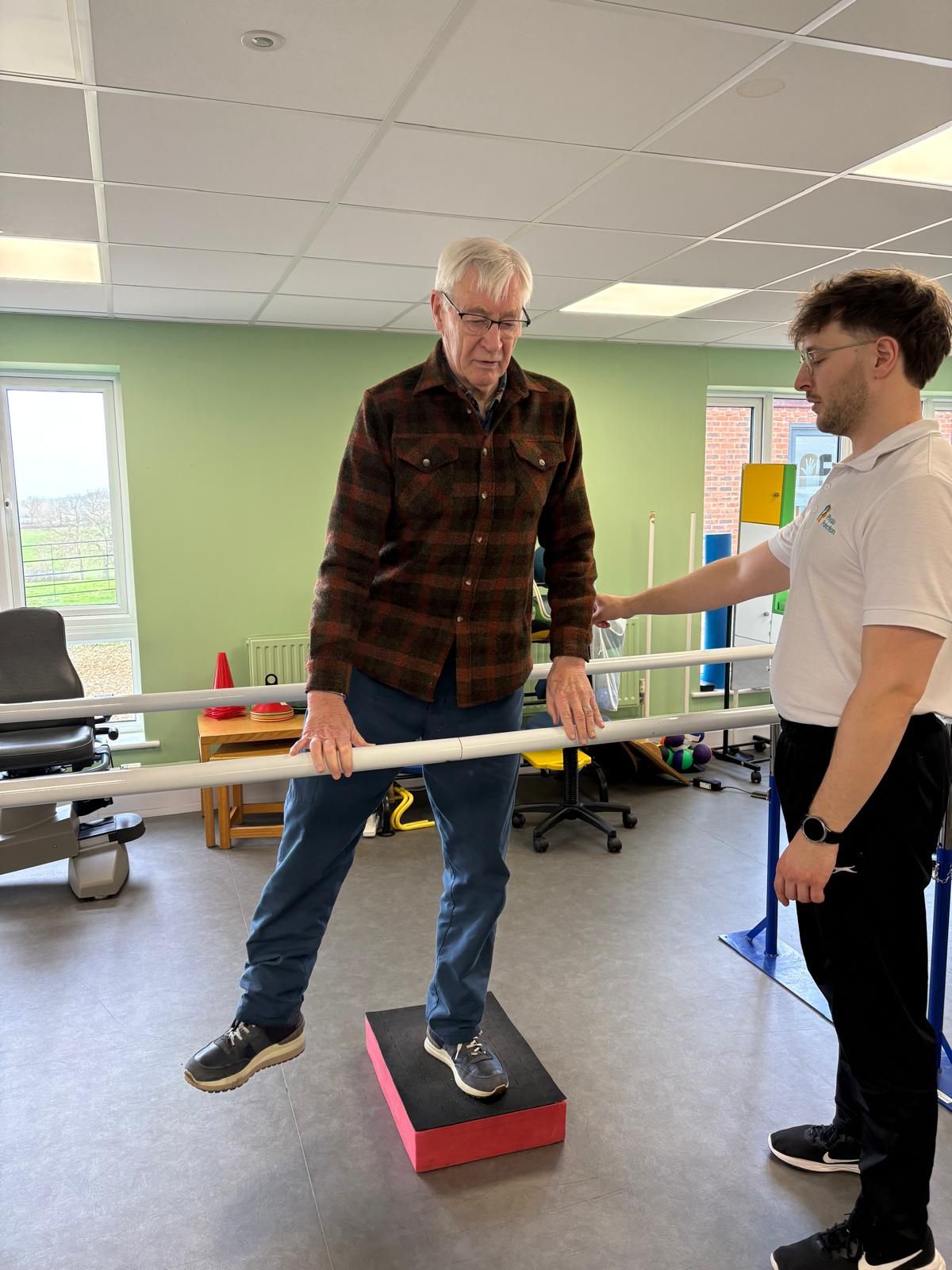
David's Case Study - Complex Neurological and Orthopaedic Rehabilitation Following Nerve Injury and Femoral Fracture
David was referred to PhysioFunction in late 2024 following consultation with a spinal specialist. He had developed a trapped nerve in his lower spine, resulting in a right-sided drop foot accompanied by sensory changes in the foot. This significantly affected his walking ability and confidence, necessitating external support for mobility.
David’s medical history was notable for bilateral total hip replacements (2016) and long-standing knee osteoarthritis related to historic sports injuries. These factors were recognised early as important considerations in his rehabilitation planning.
Initial Assessment and Management
David initially worked with Specialist Neurological Physiotherapist Claire Everett who adopted a comprehensive approach, undertaking a detailed assessment of David’s neurological presentation, gait, strength, and functional limitations. Clear explanations were provided regarding the nature of his nerve injury, prognosis, and recommended management strategies.
Functional Electrical Stimulation (FES) was trialled but did not result in meaningful improvement. However, David responded very well to use of a Boxia splint, which supported foot clearance and enabled steady improvements in gait quality. As a result, he progressed to walking more confidently and began to re-engage in valued activities including attending rugby matches, overseas travel, and driving.
To further support his recovery, a structured programme of strengthening, conditioning, and balance retraining was initiated with specialist rehabilitation therapist Keiran, following recommendation from Claire. This programme led to further functional gains, including walking without a stick for a period.
Significant Setback: Femoral Fracture
During ongoing rehabilitation, David unfortunately sustained a serious fall at home, resulting in a mosaic fracture of the right femur. Surgical repair required a six-hour operation involving the insertion of an intramedullary rod extending from the hip to just above the knee, with fixation of the fractured bone fragments. Post-operatively, David experienced a prolonged period of non-weight-bearing and relied on a frame for mobility.
Given his positive prior experience, David chose to return to PhysioFunction to guide his post-operative rehabilitation. Recovery was acknowledged from the outset as likely to take several months, with emphasis on restoring strength, mobility, and confidence.
Post-Operative Rehabilitation
Rehabilitation Therapist Keiran designed and implemented an individualised rehabilitation programme addressing:
- Gradual restoration of weight-bearing through the right lower limb
- Strengthening of the right thigh musculature
- Balance retraining and gait re-education
- Ongoing management of drop foot and joint replacement considerations
David demonstrated excellent adherence and motivation throughout this period. With consistent therapy, he progressed from using a frame to walking with two sticks, and subsequently to one stick, alongside marked psychological gains in confidence and independence.
His return to driving which was originally forecast after the operation as not being likely in less than seven months from the operation, was achieved in less than five months, approved by the surgeon who had carried out the operation. This was due to the programme he was going through to strengthen his right leg and the return to weight bearing as a result.
Identification and Management of Leg Length Discrepancy
During follow-up, a 20 mm shortening of the right leg was identified, contributing to gait asymmetry and limiting further progress. PhysioFunction promptly liaised with David’s GP, providing a detailed written request for orthotics referral.
Although there was a delay in provision, introduction of the shoe build-up had a clearly positive impact. Gait stability improved, allowing further progression in mobility and reducing compensatory strain.
Current Status and Ongoing Goals
David continues to work closely with Keiran to address residual weakness from the femoral fracture, alongside managing the ongoing effects of historical drop foot, hip replacements, and knee osteoarthritis. His primary goal remains returning to walking unaided, and he is now approaching this milestone.
Despite setbacks, David has made substantial progress both physically and psychologically. He has gradually resumed social activities and hobbies, with increasing confidence and reduced frustration.
Outcome and Reflections
David’s rehabilitation journey highlights the importance of:
- Holistic assessment of complex neurological and orthopaedic presentations
- Individualised, adaptable rehabilitation planning
- Close interdisciplinary collaboration
- Recognition of both physical and psychological aspects of recovery
Throughout his care, PhysioFunction maintained a consistently professional, compassionate, and client-centred approach. David reports feeling listened to, supported, and reassured at every stage - from initial contact with client services through to clinical care.
Client Perspective
David describes PhysioFunction as providing “a complete professional service in a friendly and considerate manner” and strongly recommends their services. He emphasises the importance of full disclosure from patients to allow clinicians to deliver the most effective care.